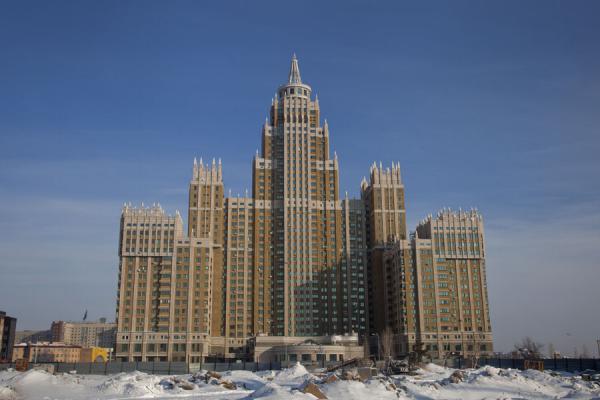
The Triumph of Astana, a building on the model of the Seven Sisters of Moscow, built after the the fall of the Soviet Union
Showing posts with label Soviet Union. Show all posts
Saturday, 26 April 2014
A Journey Through Stalinist Architecture around the World Part IV: The Former Central Asian Soviet Republics
I haven't updated this in quite some time, but now is a good time as any to update this series. Today, it's the turn of Central Asia to take a brief, very brief, place in the sun.
Saturday, 7 December 2013
A Journey Through Stalinist Architecture around the World Part II: The Former Belorussian Soviet Republic
Now, I'm going to continue to share more photos and examples of Constructivist architecture. This country we will be exploring would Belarus, a country that still has a massive amount of Soviet architecture left over.
Independence Avenue in Minsk, Belarus
A Stalinist Apartment in Minsk.
The House of Government in Minsk.
KGB Headquarters in Minsk. (The Belorussian Secret Police is still called KGB)
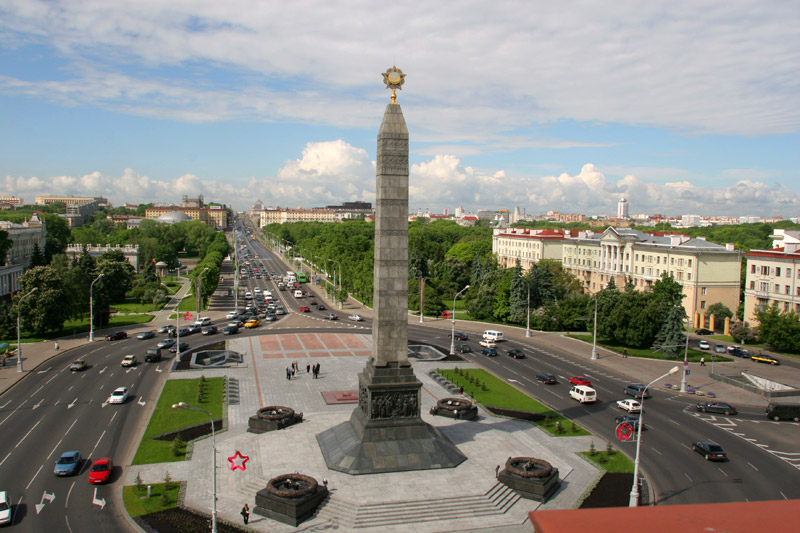
Victory Square in Minsk.
Trade Unions Palace of Culture in Minsk
In the next post we'll explore more of the former Soviet Republics!
Thursday, 7 November 2013
A Journey Through Stalinist Architecture around the World Part I: The Former Russian Soviet Federative Socialist Republic
Now, this might be seen as the continuation of my earlier blog post involving my somewhat informative rant on both Stalinist Architecture and Constructivism. In this series of blog posts, I will just try my best and share Stalinist Architecture that can be found around the world.
The first country that has a sizeable amount of these buildings is the biggest republic in the former Soviet Union, the Russian Soviet Republic. Here are several examples of the buildings built in Stalinist style in the Russian Federation.
The main entrance to All-Union Agricultural Exhibition in Moscow
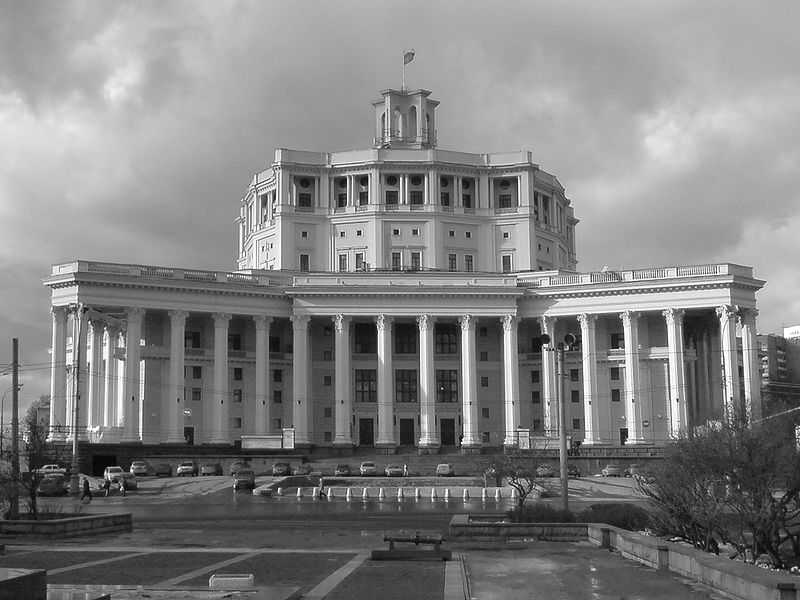
The Red Army Theatre in Moscow
Rosenfeld tower in Moscow
Hotel Ukraina in Moscow, one of the Seven Sisters of Moscow
The Moscow Metro
Main building of the South Ural State University in Chelyabinsk
City Duma in Yekaterinburg
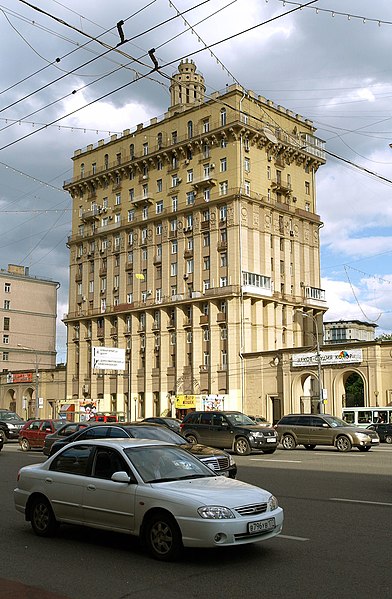
Stalinist apartment blocks in Moscow.
Stalinist architecture has seen a form of revival in today's Russia leading to newer Stalinist style buildings popping up in the skyline.
This is the Triumph Palace in Moscow, built only recently, in the style of the "Seven Sisters of Moscow"
On the next part of this picture series, I will post Stalinist buildings from the other former Soviet republics such as Ukraine, Kazakhstan and Belarus.
Friday, 21 June 2013
Anniversary of Operation Barbarossa.
Well today in June 21 on 1941 was the date when Germany under Hitler launched its assault on the Soviet Union. 4 hard years of fighting and this led to the ultimate allied victory against the Third Reich. This was also the start of the Eastern Front or the Great Patriotic War as it's called in the former Soviet Republics.
Anyway, to commemorate the invasion, here's a video relating to the initial operation itself.
This is from the series Soviet Storm: War in the East.
Anyway, to commemorate the invasion, here's a video relating to the initial operation itself.
Thursday, 25 April 2013
The Days of Stalinist Art and Architecture
Well, I guess it's time to continue my rants and somewhat informative blog series about Soviet architecture.
Today, I will start to work and explain the next era in the Soviet Union's respective eras on architecture and art. This would be the days of Stalin, and how his own insanity and ideological differences with the revolution destroyed the relative freedom that the revolution gave to architects and artists and how his style had a lasting legacy on the many skylines of cities all around the Eastern Block.
A Stalinist poster. Propaganda posters such as these became more and more commonplace as the freedom and ingenuity of the Constructivist Era slowly eroded away against Stalin's own personal taste.
As Stalin took power in the late 1920's, The Soviet Union was a bit different from the more darker and stereotypical view that many in the West had about the country. The country didn't have the massive collectivised farms that was typical in the countryside. Small private enterprises existed alongside state enterprises as the New Economic Policy (NEP) began the road to recovery for the country's economy after the chaos of the First World War and the Russian Revolution.
The rise of Stalin to General Secretary of the Party began the long road for his own vision of Russia to start and flourish. Socialist Realism became the only allowed and endorsed style of art in the intellectual and academic circles. Socialist Realism was a style that was created in the country as many in the Communist Party deemed earlier art styles such as Impressionism and Cubism as "decadent bourgeois art". Socialist Realism became official state policy in 1932 linking its art styles to the Stalinist ideology that the government at the time championed.
Spring Day by Nikolai Podzneev. This painting was one of the styles that was common throughout art of the Socialist Realism style which gave more of an emphasis on the lives of the proletariat.
In the world of architecture, the avant-garde and futuristic styles of Constructivism utterly disappeared in Stalin's reign of the country only to be replaced by the imposing style of the Neo-Renaissance buildings that dot Moscow today. Almost all of these buildings were usually associated with the Socialist Realism school of art and architecture which at this time was the only art style allowed in the country.
The Moscow Metro. The first lines were built in the 1930's giving the metro's stations a grand and imposing feeling to all those who walk amongst its halls, something that Stalinist architecture was meant to do.
Stalinist architecture took a more international approach by the end of the second world war as Soviet influence spread from Berlin to Beijing bringing this art style towards many of the Communist states that arose out of the war. Beijing's Tiananmen Square's buildings, which were built in the tenth anniversary of the Communist victory in the Civil War resemble this. As the Stalin's Soviet Union arose to superpower status, the nation's art arose to international prominence as well.
The University of Moscow, one of the "Seven Sisters" that dominated Moscow's skyline.
Tuesday, 12 March 2013
Constructivist Art and Architecture
After watching a couple of the BBC's Art Of Russia episodes, I decided that one topic that would be interesting to delve into would be the art and the architecture of the early Soviet Union. This period is known as the Constructivist era. Much of the art and architecture of the period coincided with the revolutionary ideas that were sweeping the country. Constructivism was to be the new face of the revolution in artistic terms.
The poster above is one of the many examples of Constructivist posters and art that dominated the 1920's in Soviet Russia, right before the nightmare of the Stalinist regime. Constructivism itself began to emit some form of light after the chaos of the First World War and evolved from the abstractness of the Suprematist Art Style, one of its famous examples is the Black Square by Kazimir Malevich. Constructivism also began to be known as the art in service of the revolution. A few of its famous adherents were Aleksander Rodchenkno and Sergei Eisenstein. Constructivism also had an effect on the architectural landscape of the USSR, making this movement at the forefront of modern art.
The picture above shows one of the buildings built from this era, The Zuev Worker's Club, This modern looking building had all of the characteristics of the Constructivist Era. If one were to look at it, one could mistake it for a building that was built relatively recently in the 21st century, but this was built in 1926, right at the heart of the New Economic Policy Era of the Soviet Union. The movement influenced other art styles such as Bauhaus and De Stijl. It unfortunately had slowly begun to die out as Stalin took the helm of the country replacing the vibrant Constructivist architecture with the imposing style of neoclassical architecture which he championed.
Subscribe to:
Posts (Atom)
.jpg)